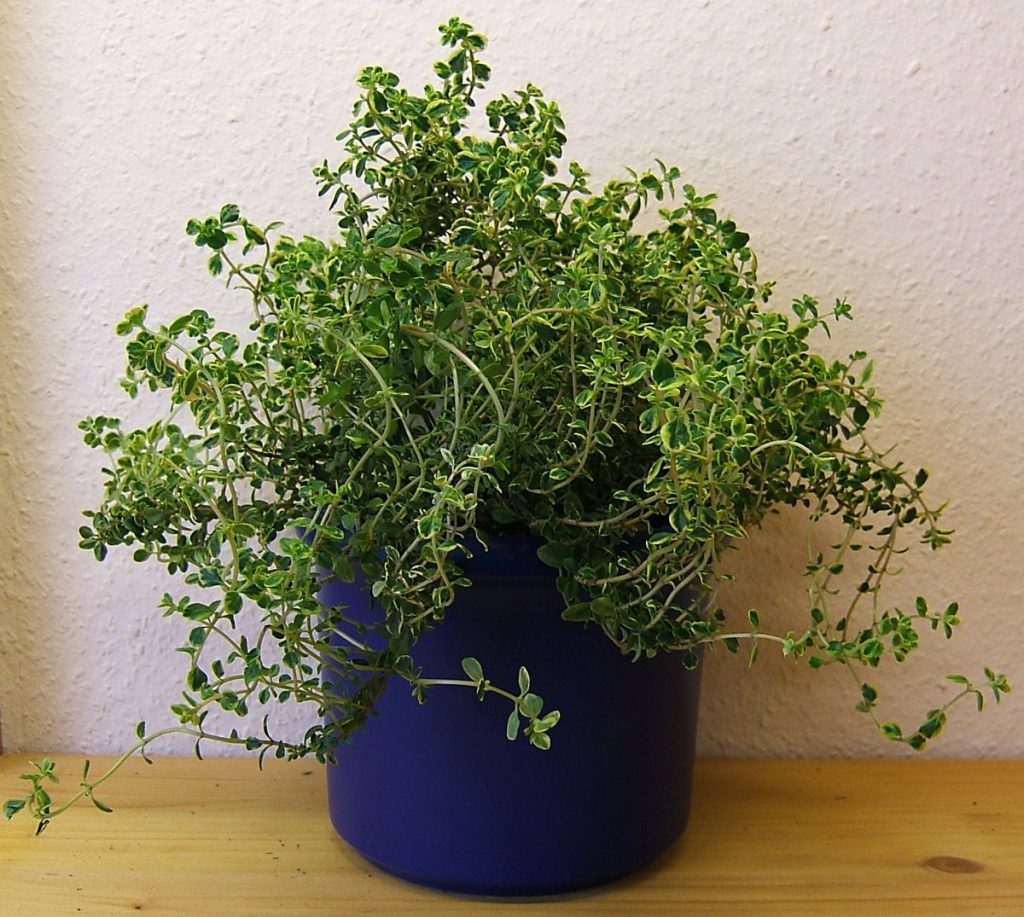
A pothos that spent the summer on a shaded shelf usually reports back by midwinter. New leaves come out smaller than the ones before them, the cream margins narrow to a thread, and the vines keep extending anyway, thinner at every joint. None of that is a disease. The plant is rebalancing its budget against the light it actually receives, and most complaints about golden pothos, from washed-out leaves to bare rope-like vines, come back to that same budget.
Why variegation fades in low light
The pale panels in a golden pothos leaf are a chimera: two genetically different tissues growing side by side in the same blade. The cream tissue carries almost no chlorophyll, so it cannot feed itself, and the green tissue beside it pays the bills. That chimerism is light-dependent, and the arrangement holds only while the plant has light to spare.
In a bright room, filtered through a sheer curtain or bounced off a pale wall, new leaves keep their stripe. Move the same plant into a dim hallway and the next leaves unfurl mostly green, because green tissue is what returns a profit. Old striped leaves rarely turn green again; the change appears only in new growth, which is why one plant can look half variegated for months.
Solid green shoots grow faster than striped ones and, left alone, outgrow and shade the variegated vines. That is reversion, not fading: the shoot emerges entirely green from a node that used to produce patterned leaves. Cut it back to the last well-variegated node, or it will take over the pot within a season.
Indoors, 6 to 8 hours of bright, filtered light is a reasonable target: roughly 1 to 2 feet back from an east or west window, or a few feet in from a south window behind a curtain. In winter, move the plant closer to the glass or add a lamp. Short days are usually when the stripe thins.
Pinching versus trailing: two different results
A vine’s growing tip produces auxin, which suppresses the buds at the nodes below it. Leave it alone and the vine keeps extending: internodes stretch, leaves shrink, and the plant becomes a long stem with a tuft at the end. Remove the tip and the buds underneath wake up.
That is all pinching amounts to: cut about a quarter inch above a node, the joint where a leaf stalk meets the stem, and leave two or three leaves on the piece still attached to the pot. Within 2 to 3 weeks at 70 to 75°F, one or two shoots push from the nodes below the cut, so each pinch turns one growing point into three.
Trailing and pinching are not opposites so much as two shapes. A plant left to trail covers a shelf edge and looks handsome for a year or two, then goes bare near the pot; one pinched twice a year stays dense and short. If you want both, pinch half the vines and let the rest run, then cut the runners back to a node once they pass about 3 feet, roughly where leaf size starts to drop.
Timing matters more than technique. Pinch in spring or early summer, while the plant can replace what you removed; a hard cut in November leaves bare nodes through the darkest months and regrowth is slow.
Pot size and why pothos sulk after repotting
Pothos roots are vigorous. A 6-inch pot can pack solid in one growing season, and once roots circle the surface, water either runs straight through or sits on a root-bound mat. When you move up, go one size: 6 inches to 8, never 6 to 12.
An oversized pot holds a volume of moist mix the roots never reach, and that reservoir is where trouble starts. Lower leaves yellow, the soil stays damp for two weeks, and roots at the bottom begin to rot. The plant is not thirsty; its roots are sitting in wet soil.
Some sulking is normal: expect 7 to 14 days of limp leaves and stalled growth, occasionally one yellow leaf, while the plant rebuilds fine roots. Keep it in the light it knew, water only when the top inch is dry, and skip feeding for 4 to 6 weeks. If the root ball was dense, tease the outer roots apart first so they grow into the new mix instead of circling in the old shape.
Late spring is the kindest time. Repot every 12 to 18 months, or sooner if roots show at the drainage holes and the pot dries within 3 days of watering.
Watering a plant that lives in a hanging basket
A basket dries faster than a pot on a table. It hangs in moving air, holds less mix than a floor pot of the same width, and the trailing vines shade the rim while the root ball bakes. Check every 4 to 7 days in summer, every 10 to 14 in winter, and expect the schedule to shift with heating and light.
Weight is the most reliable gauge. Lift the basket: a dry 8-inch basket feels startlingly light, and a soaked one has real heft. If you are unsure, push a finger or a wooden chopstick 2 inches into the mix and look for damp crumbs clinging to it.
Water slowly and evenly until it runs from the drainage holes, then let the basket drain in the sink or shower for 10 to 15 minutes before hanging it back up. A basket that sits in a full saucer, or in a decorative sleeve with no holes, keeps its lowest roots wet while the top dries.
If the mix has gone bone dry, it may repel water. Set the whole root ball in a basin of tepid water for 20 to 30 minutes to rehydrate from below, then drain. Water in the morning when you can, and avoid cold tap water on a warm root ball.
Cuttings that keep their stripe
Take cuttings with at least two nodes: one goes under the surface to root, the other stays above with a leaf. Single-node cuttings can work, but they carry less stored energy, have no backup if the buried node fails, and establish slowly.
Cut about an inch below a lower node, strip the leaf that would be buried, and keep one or two leaves. Take the cutting from a strongly variegated stretch of vine, not a green shoot: the pattern on the parent stem is the best prediction of what the new plant will produce.
Root in water, changed every 5 to 7 days, or in a small pot of the same mix. At 70 to 75°F, roots usually appear in 3 to 4 weeks. Water roots are brittle, so pot them up at 2 to 4 inches and keep the new plant humid for 10 days.
If a rooted cutting starts throwing solid green leaves, cut it back to the last node that produced a striped leaf. A cutting that reverts twice is not worth keeping; the green tissue has simply outcompeted the pale.
Yellow leaves: the three usual causes
One yellow leaf on an old vine every couple of months is ordinary turnover: it yellows evenly, dries, and drops. Anything more needs a diagnosis.
- Too wet. Lower leaves yellow and feel soft rather than crisp, the mix stays damp for more than 10 days, and the pot is heavy. Check that the drainage holes are open, let the mix dry to 2 inches, and repot into fresh mix if the roots are brown and mushy.
- Too dry. Leaves yellow first and then crisp at the edges, oldest first, and the mix has pulled away from the sides of the pot. Soak the pot for 20 minutes rather than pouring water through a hardened surface.
- Hungry. The whole plant looks pale, the oldest leaves yellow uniformly, and growth has slowed. If it has been 6 months or more since the last feed during the growing season, feeding at half strength every 4 weeks will usually correct it.
Bright direct sun is a fourth, less common cause: leaves facing the glass bleach and then yellow while the shaded side stays green. Move the basket back a foot and the damage stops spreading.