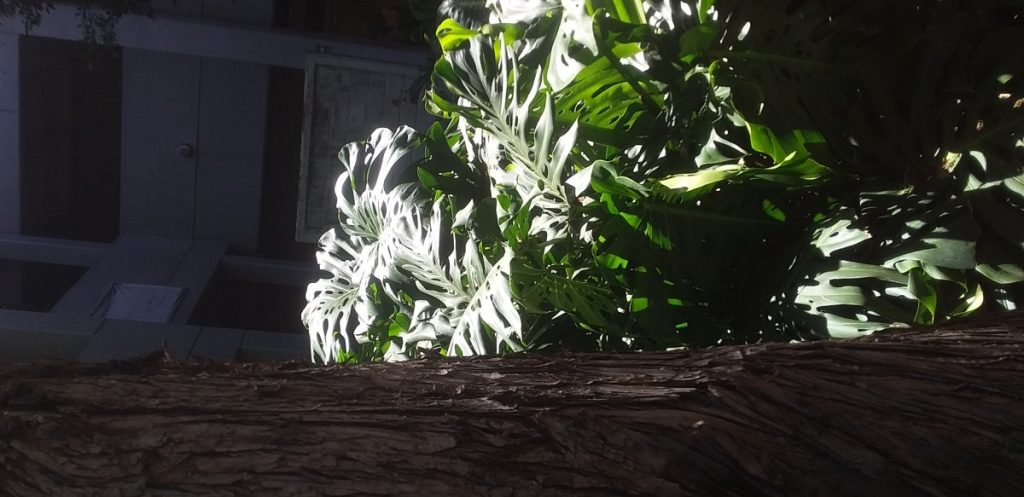
At 10:40 on a wet October night, a flashlight raked across a lettuce bed usually turns up more slugs than a month of daytime scouting. Slugs and snails feed mostly between dusk and dawn, travel farther on damp nights, and shelter within a few feet of the plants they damage. A count taken at the right hour shows where the pressure sits: under the lip of a raised bed, along the garage wall, beneath the flat stone by the hose bib. That is where the work belongs.
The night patrol test
Go out 45 to 90 minutes after full dark on a night following rain, with a dim light held low, and count every slug and snail on a measured 3-foot section of row, checking both the soil surface and the plants. Repeat on three consecutive nights, because one dry night can halve the count without changing the population. More than four or five animals per 3 feet on seedlings or soft-leaved greens is enough to justify intervention; a single animal on a mature shrub is not.
Hand-picking is the same survey with a jar attached, and in plots under roughly 200 square feet it remains the most dependable method available. Fifteen to 20 minutes at dusk with a flashlight and a jar of soapy water usually fills the jar; go back 30 minutes later for the second wave. Three or four consecutive nights at the start of a wet spell removes the adults that would otherwise lay the next generation, and a weekly tally shows whether the population is falling. Scrape egg clusters — translucent, pearl-like masses in soil cracks and under pots — into the jar as well; they are worth as much as the adults.
Why beer traps catch a fraction
A sunken cup of beer drowns the animals that fall in and releases fermentation volatiles that pull others toward the bed from several feet away. A trap that collects 30 slugs overnight has killed 30 animals and advertised the bed to the rest. On a small lot near other gardens, that trade is a poor one.
Placement decides how bad the trade is. Bury the cup so the rim sits about an inch above the soil line; a rim flush with the surface collects ground beetles, centipedes, and earwigs, all of which eat slugs. Refresh the beer every two to three days, and after every heavy rain, because a diluted or overflowing cup stops working entirely. A propped lid keeps rain out and pets off.
The arithmetic is the reason traps cannot carry a control program. A 10 by 10 foot bed that supports a breeding population may hold hundreds of animals in a wet season, and a cup catches a few dozen at best. Treat beer traps as a scoreboard, not a strategy.
Moisture, mulch, and harbourage
Watering at 7 or 8 in the morning instead of at dusk is the cheapest change most gardens can make. Slugs need a damp surface to move and to lay eggs, and a bed watered in the morning has a dry surface by evening. Drip lines deliver water to the root zone without wetting the mulch surface, and they cut the humid layer that overhead evening watering leaves behind for 10 to 12 hours.
Mulch is worth keeping, but depth and placement matter. Two to three inches of compost or bark holds soil moisture and suppresses weeds, and it also gives slugs a damp roof. Keep a 2 to 3 inch clear ring of bare soil around the stems of seedlings and soft-leaved perennials.
Shelter is the part most gardens overlook. Boards, bricks, inverted saucers, empty pots, and the damp mat under a leaky downspout all shelter animals through the day. Lift a plank that has sat in the bed for a week and count what is underneath; that number is your local breeding stock. Store pots upside down, move stacked lumber off the soil, mow or trim the grass edge where it meets the bed, and clear fallen leaves from the base of walls in fall. Reducing shelter is slower than picking and far more durable.
Barriers that survive rain
A barrier only works if it is continuous and high enough. Two to three inches of vertical height, no gaps at corners, and no bridge where a leaf, a stake, or a clump of mulch touches the top edge. One drooping hosta leaf over a copper band defeats the whole installation, and the failure usually happens at overlaps where two strips meet.
For individual plants, a cloche from a 2-liter bottle with the base cut away protects a seedling until it outgrows the cover; push the cut edge an inch into the soil and leave the cap off. Copper mesh collars around the legs of a raised bed work the same way, provided the mesh is fastened tight and nothing drapes across it.
Abrasive strips are the traditional alternative. Sharp horticultural grit or coarse sand creates a dry, uncomfortable surface, and it works until rain splashes soil over it or the particles sink into soft ground. Crushed eggshells are widely recommended and just as widely disappointing; the pieces are usually too large and too smooth to deter a determined animal. Whatever barrier you choose, inspect it after every rain, since a barrier that fails at one point fails completely.
Copper, diatomaceous earth, and their limits
Copper tape earns its reputation on pots and benches, not in beds. The reaction that deters slugs depends on a dry, clean metal surface, and tape applied to a wet rim, or buried where soil splashes, develops an oxide layer and stops working. Apply it to a dry, washed pot rim, press it down firmly, and replace it when the surface turns green-black or the adhesive lifts.
Diatomaceous earth works through the same dryness requirement, and it is even less forgiving. The powder abrades the animal’s foot as it crawls, which means the band has to be dry, several inches wide, and renewed after every watering or heavy dew. A single pass with a hose erases it. Wear a dust mask when applying it, keep it away from flowers where pollinators work, and accept that it cannot tell a slug from a ground beetle.
Both are helpers. Neither compensates for wet mulch piled against stems, and neither holds a line through a rainy week without maintenance.
Biological controls and the hedgehog myth
Nematodes sold for slug control are a labeled biological option, not a home remedy. The organism, Phasmarhabditis hermaphrodita, is applied as a live suspension to moist soil, usually in the evening, and watered in according to the label. Most products specify soil temperatures above roughly 41°F, and the rate and water volume on the label matter, because the nematodes must reach the surface alive. Keep the bed damp for a week or two afterward and repeat on the interval the label gives, commonly around six weeks in wet weather. Results vary with soil texture and moisture, so treat the first application as a test rather than a guarantee.
The hedgehog story deserves a direct answer. Hedgehogs do eat slugs, but earthworms and beetles make up most of their diet, and an animal that ranges over several acres in a night spreads its feeding thinly across many gardens. One hedgehog will not clear a bed, and moving hedgehogs around to try is both ineffective and hard on the animals, whose numbers have fallen across parts of Europe. Ground beetles, centipedes, toads, and songbirds are more relevant at garden scale, and building their numbers takes seasons of undisturbed shelter and no insecticide sprays. Encouraging predators is worth doing and slow to pay off.
If you use a bait, follow the label exactly: rate, placement, and the warnings about pets and wildlife are part of the product. Place baits under a board or a slate so rain does not wash them and children and pets cannot reach them. Expect damage to drop within two to three weeks of consistent night picking, morning watering, and shelter removal. Keep counting, because the population will rebuild from the edges of the garden, and the edges are where next spring’s problem starts.